
Here’s a number that should stop you in your tracks: global cloud spending crossed $1 trillion in 2026 for the first time ever. That’s not a typo. Every app you use — from Netflix to Google Maps to your company’s payroll system — runs on cloud computing. And right now, companies across the world are desperately hunting for people who understand it.
The problem? There aren’t enough trained professionals to fill those seats.
That’s exactly why you’re reading this at the right time. Whether you’re a fresh graduate, a working professional looking to switch, or someone who simply wants a better-paying career — cloud computing is one of the smartest bets you can make in 2026.
In this guide, Gloud Academy breaks it all down for you. No jargon. No fluff. Just what you need to know — and exactly how to get started.
Gloud Academy
Website : https://gloudacademy.com/
Direction : https://maps.app.goo.gl/yMb9jxPmFzoXndzc9
Contact : 7092007979
What Is Cloud Computing in 2026?
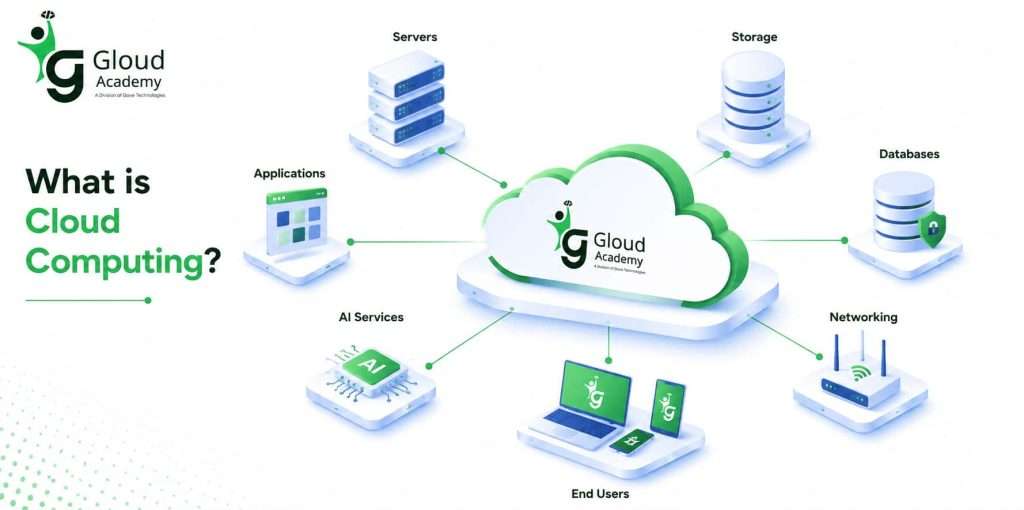
In simple words: cloud computing means using the internet to access computers, storage, and software — instead of owning physical machines yourself.
Think of it like electricity. You don’t build your own power plant. You plug in and pay for what you use. Cloud works the same way.
In 2026, there are four main types of cloud services:
- IaaS (Infrastructure as a Service) — rent servers and storage online
- PaaS (Platform as a Service) — build apps without managing hardware
- SaaS (Software as a Service) — use software through a browser (Gmail, Zoom)
- FaaS (Function as a Service) — run small pieces of code on demand
Back in 2020, companies used the cloud mostly for storing files and hosting websites. Today, in 2026, the cloud powers artificial intelligence, real-time banking, self-driving car data, and even hospital patient records. The technology has grown up fast.
Why Cloud Computing Is More Relevant in 2026 Than Ever Before
The AI-Cloud Connection Nobody Talks About
Here’s something important: every AI tool you’ve heard of — ChatGPT, Google Gemini, Microsoft Copilot — runs entirely on cloud computing infrastructure. Without the cloud, AI simply cannot exist at scale.
AWS Bedrock, Azure OpenAI Service, and Google Vertex AI are all cloud platforms built specifically to run AI workloads. This means as AI grows, cloud grows with it. The two are now permanently tied together.
According to Flexera’s 2026 State of Cloud Report, 92% of enterprises now use multi-cloud strategies — meaning they don’t rely on just one cloud provider. They use two or three simultaneously.
5 Reasons Cloud Computing Matters More Than Ever in 2026
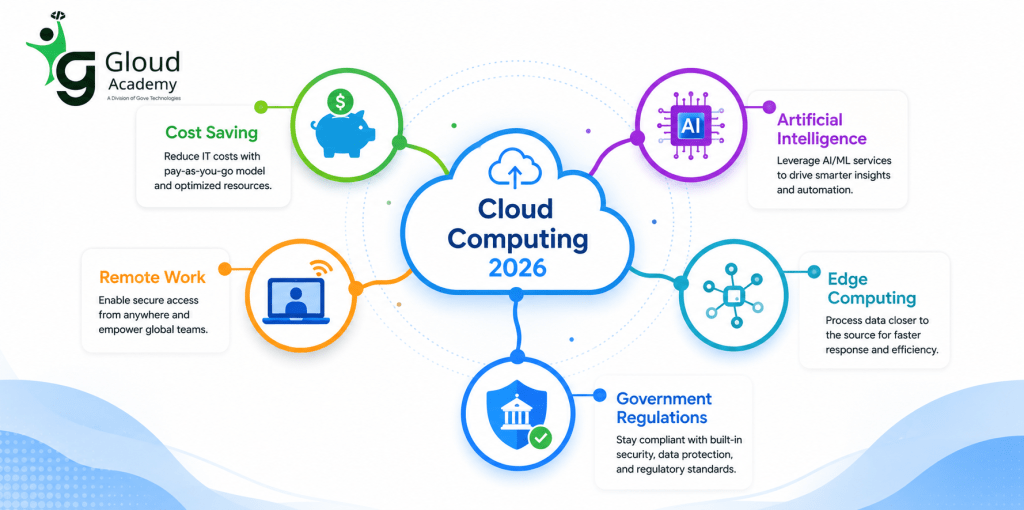
1. It saves companies serious money
Businesses no longer buy expensive servers. They pay only for what they use. Microsoft reported that companies moving to Azure saved an average of 37% on IT costs in the first year alone.
2. AI runs on it
Every large language model, every recommendation algorithm, every fraud detection system — all of it lives on cloud infrastructure. Cloud computing is the backbone of the AI revolution.
3. Remote work made it permanent
Since 2020, remote and hybrid work became the norm. Cloud-native tools like Microsoft 365, Slack, and Salesforce made this possible. Those tools aren’t going away.
4. Edge computing is rising fast
5G and IoT devices generate billions of data points every second. That data can’t travel all the way to a central server — it needs to be processed near the source. Edge computing, which sits between devices and the cloud, is one of the fastest-growing segments of the tech industry.
5. Governments now require it
Data residency laws in the EU, India, and other regions mean companies must store citizen data locally. Sovereign cloud products from AWS, Azure, and GCP are handling this — and demand is growing every quarter.
Cloud Computing Jobs & Salaries in 2026
This is where things get exciting.
The cloud talent shortage is real. According to LinkedIn’s 2026 Jobs Report, there are over 2.4 million unfilled cloud-related jobs globally. In India alone, the cloud job market is growing at a 24% CAGR, according to Nasscom.
Here’s what the top cloud computing roles pay right now:
| Role | Global Salary (USD) | India Salary (INR/year) |
| Cloud Architect | $160k–$210k | ₹28–45 LPA |
| Cloud Security Engineer | $130k–$175k | ₹22–38 LPA |
| ML/AI Cloud Engineer | $145k–$195k | ₹24–40 LPA |
| Site Reliability Engineer | $140k–$180k | ₹20–35 LPA |
| DevOps/MLOps Engineer | $125k–$165k | ₹18–32 LPA |
| Cloud Data Engineer | $115k–$155k | ₹16–28 LPA |
| Cloud Engineer | $110k–$150k | ₹12–22 LPA |
| FinOps Analyst | $90k–$130k | ₹10–18 LPA |
Even at the entry level, a fresher with an AWS or Azure certification in India earns between ₹5–8 LPA — significantly above the average graduate salary.
“I had zero IT background. I was working as a sales executive. After completing Gloud Academy’s Cloud Starter programme, I cleared my AWS SAA exam in 11 weeks and landed a Cloud Support Engineer role at ₹7.2 LPA.”
— Ravi Kumar, Gloud Academy Graduate, Bangalore, 2025
[View All Cloud Career Programmes at Gloud Academy ]
Best Cloud Certifications to Get in 2026
Not all certifications are equal. Here’s what actually moves the needle in 2026:
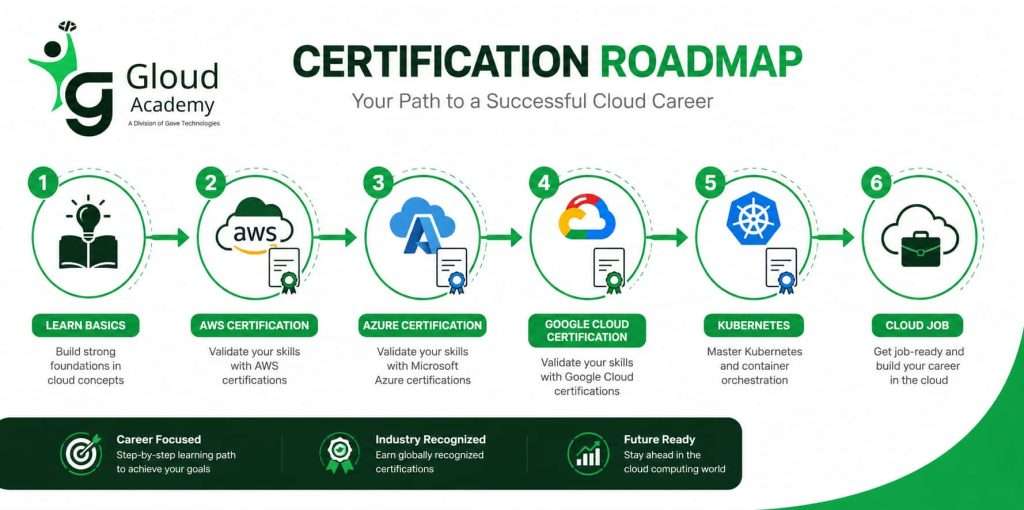
1. AWS Certified Solutions Architect – Associate (SAA-C03)
The most recognised cloud computing certification on the planet. Over 400,000 professionals hold it globally. Average salary uplift: 28% after passing.
2. Microsoft Azure Administrator (AZ-104)
Strongest demand in enterprise companies. Especially powerful if you’re targeting MNC jobs in India or the Middle East.
3. Google Associate Cloud Engineer
Best path if you want to work with AI/ML tools. GCP is the platform of choice for data scientists and ML engineers.
4. Certified Kubernetes Administrator (CKA)
Fastest-growing certification in 2025–2026. Companies running containerised applications need CKA-certified engineers badly.
5. CompTIA Cloud+
Vendor-neutral and great for beginners. Covers multiple platforms without locking you into one.
At Gloud Academy, our learners achieve a 92% first-attempt certification pass rate, backed by real exam labs, mock tests, and 1-on-1 mentor sessions.
📞 [Book a Free 30-Minute Career Counselling Call — No Obligation →]
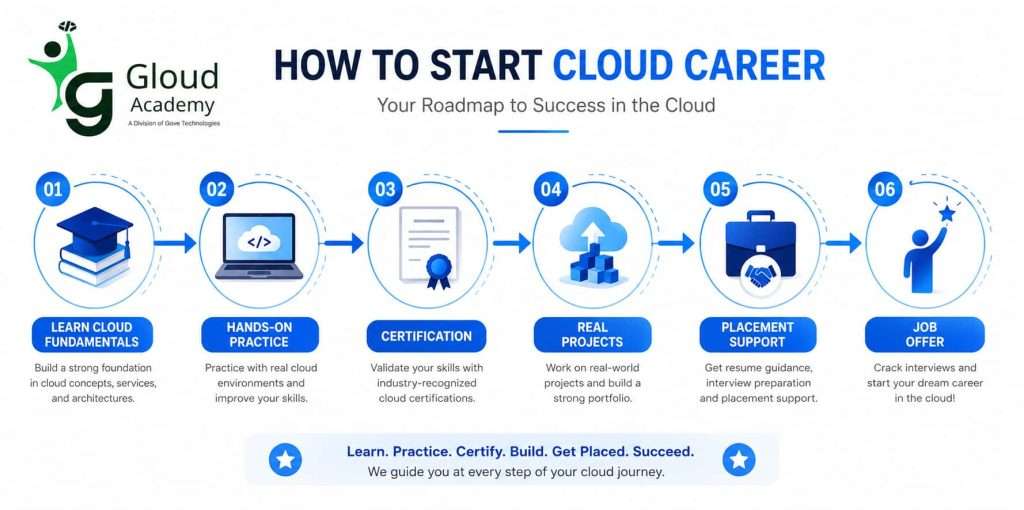
How to Start a Cloud Computing Career in 2026 — Step by Step
Think you need a computer science degree? You don’t. Cloud computing certifications are skill-based. Gloud Academy has trained teachers, bankers, and even a former chef who now works as a cloud engineer.
Here’s the exact 5-step roadmap:
Step 1: Learn the Fundamentals
Start with what the cloud is, how it works, and which services exist. Gloud Academy’s free Cloud Basics module is the perfect place to begin — no prior tech experience needed.
Step 2: Pick Your Cloud Platform
Choose between AWS (largest market share), Azure (best for enterprise careers), or GCP (best for AI careers). If you’re unsure, our counsellors help you decide based on your goals.
Step 3: Get Certified
Study for 8–16 weeks, depending on your pace. Sit the exam. Pass it. This single step can change your salary overnight.
Step 4: Build Real Projects
Employers don’t just want a certificate — they want proof. Gloud Academy’s lab environment lets you build real projects on live cloud platforms. Your portfolio becomes your interview.
Step 5: Apply Strategically
Use platforms like LinkedIn, Naukri, and Glassdoor with cloud-specific keywords. Gloud Academy’s placement support team helps you prep for interviews and negotiate your salary.
[Enrol Now — Next Batch Starting Soon. Limited Seats Available ]
Frequently Asked Questions
Is cloud computing still in demand in 2026?
Yes — demand is at an all-time high. With 2.4 million unfilled jobs globally and a talent gap widening every quarter, qualified cloud professionals are among the most sought-after in tech.
Which cloud platform should I learn — AWS, Azure, or GCP?
AWS for the widest job market. Azure for enterprise corporate roles. GCP if you want to specialise in AI and data. All three are excellent choices.
Can I learn cloud computing in 3 months?
Yes. Gloud Academy’s structured tracks are designed for full-time learners to become job-ready in 12–16 weeks.
What salary can a fresher expect in India in 2026?
Freshers with a recognised certification earn between ₹5–8 LPA. With 3–5 years of experience, that climbs to ₹16–28 LPA and beyond.
Do I need a CS degree to get a cloud job?
No. Certifications from AWS, Microsoft, and Google are recognised equally — sometimes more — than university degrees in hiring for cloud roles.
Your Cloud Career Starts Today
The facts speak for themselves. Cloud computing is not a trend — it’s the foundation of how every modern business operates. It’s the infrastructure behind AI, remote work, e-commerce, healthcare, and finance. The jobs are there, the salaries are real, and the skills are completely learnable.
You don’t need a degree. You don’t need years of experience. You need the right programme, the right guidance, and the decision to start.
At Gloud Academy, we’ve helped over 50,000 learners step into cloud careers — from complete beginners to experienced professionals looking to level up. Our instructors are AWS, Azure, and GCP certified with real-world industry experience. Our pass rates speak for themselves.
The cloud talent gap won’t last forever. The people who get certified now will have the biggest advantage.
Your next step takes less than 60 seconds:
⭐ Rated 4.9/5 from 100 learner reviews on Google